Designed for pulmonary and critical care settings, this solution pairs conventional reusable bronchoscopes with single-use variants to eliminate cross-contamination risks in vulnerable patients. Coupled with lightweight imaging processors and portable displays, it delivers immediate, high-resolution airway assessment—from ICU bedside to bronchoscopy suites—where infection control is paramount.
Biovisus provides reusable and single-use bronchoscopes to meet all clinical demands. The reusable model has a 5.1 mm outer diameter, 2.0 mm working channel, 180-degree upward and 130-degree downward deflection, and a 120-degree field of view. The sterile pre-packaged disposable bronchoscope shares identical optical parameters, removing reprocessing waiting time and cross-contamination hazards.
The reusable bronchoscope’s insertion tube withstands 500 procedures before full maintenance. Its bending segment adopts multilayer stainless steel mesh covered with anti-enzyme polyurethane coating. A PTFE lining inside the working channel ensures smooth movement for biopsy tools, brushes and puncture needles. The ergonomic handle has a detachable suction valve for easy cleaning and a shortcut key for photo and video recording switching.
The single-use bronchoscope comes in peel packaging with attached sterile drapes and specimen collectors. Connection to the processor’s dedicated disposable port triggers automatic loading of matching image parameters. It carries a 1.8 mm working channel; 5.1 mm adult size (600 mm length) and 3.1 mm pediatric size (450 mm length) are offered.
Both scopes work with the same imaging set: a 200 W, 5500 K mini LED light source and a 2 kg lightweight image processor. The whole setup sits on a movable cart fitted with a height-adjustable 22-inch medical screen, suitable for ICU bedside examinations. A 90 Wh lithium battery supports two hours of wireless mobile operation.
Technical Note: The disposable bronchoscope uses a 15,000-pixel coherent fiber bundle, inferior to the reusable 30,000-pixel version in resolution yet superior for infection control. Test reusable scopes for leakage after each exam; pressure drop over 2 psi within 30 seconds under 5 psi pressure signals structural damage.
Biovisus installs compact endoscopic imaging hardware built for mobile respiratory use. The system includes a palm-sized LED light source measuring 150 × 100 × 60 mm at 800 g, a 1.5 kg portable image processor sized 250 × 180 × 80 mm, and a 22-inch medical display. All equipment mounts to one rolling cart for transport between bronchoscopy rooms, ICU and emergency areas.
The light source uses one high-CRI LED chip with color rendering index above 95, supplying brightness equal to 200 W via fiber optic links. Brightness adjusts 0–100% in 1% steps. A built-in light sensor automatically corrects brightness loss from LED wear, keeping steady output over its 50000-hour service life.
The processor records 1920×1080 video at 30 frames per second and has a special airway imaging preset. This preset runs contrast boosting software tailored to respiratory tract blood vessels and mucosal tissue. Users can pause footage and measure lesions with an on-screen virtual ruler calibrated to the bronchoscope’s optical parameters.
The medical screen uses IPS panels with full 178-degree viewing angles, 400 cd/m² brightness and matte anti-glare coating suited for uneven ICU lighting. It attaches to a gas-spring arm with 50 cm vertical movement for doctors working sitting or standing. A secondary HDMI port connects extra screens or recording gear for training sessions.
Technical Note: The portable processor has a 256 GB solid state drive holding around 500 complete bronchoscopy videos; transfer stored data to hospital servers every week. The light source cooling fan runs at 25 dBA normally, and noise over 35 dBA means dust buildup that needs cleaning.
Biovisus equips bronchoscopy rooms with auxiliary gear for diagnosis and treatment. The space has an adjustable Trendelenburg exam chair, suction unit regulated from -80 to -120 mmHg, and an emergency trolley stocked with airway tools. Disposable rhinolaryngoscopes work with bronchoscopes to assist transnasal access for patients hard to intubate orally.
For bronchoalveolar lavage, the irrigation pump connects to sterile saline storage and a 60 mL syringe driver, dispensing measured 20–60 mL fluid portions to gather samples. A foot trigger lets clinicians release fluid independently without extra staff. Harvested samples go into marked luer-lock traps that connect straight to lab delivery systems.
Endobronchial ultrasound uses radial or linear ultrasound probes inserted through the bronchoscope channel. Ultrasound visuals overlay live bronchoscopy footage on the monitor, synced perfectly by the image processor. Built-in measuring tools size lymph nodes; the report automatically marks nodes wider than 1 cm on their short axis.
Treatment tools including argon plasma coagulation probes, cryoprobes and electrocautery snares fit the 2.0 mm bronchoscope channel. The electrosurgical unit has a special bronchoscopy setting capped at 30 W with coagulation waveforms to lower airway puncture risks. It checks return pad impedance every 100 ms and cuts power at 135 Ω.
Technical Note: Swap suction collection containers after patients with tuberculosis or COVID-19; seal old canisters and dispose as biological waste. Never raise ESU power above 30 W inside trachea or major bronchi, as stronger energy causes deep thermal damage to thin airway walls.
Biovisus sets strict infection control rules suited for respiratory endoscopy. Disposable bronchoscopes are the primary choice for patients with confirmed or suspected airborne illnesses including tuberculosis, COVID-19 and influenza, immunocompromised patients, and those carrying multidrug-resistant organisms in sputum.
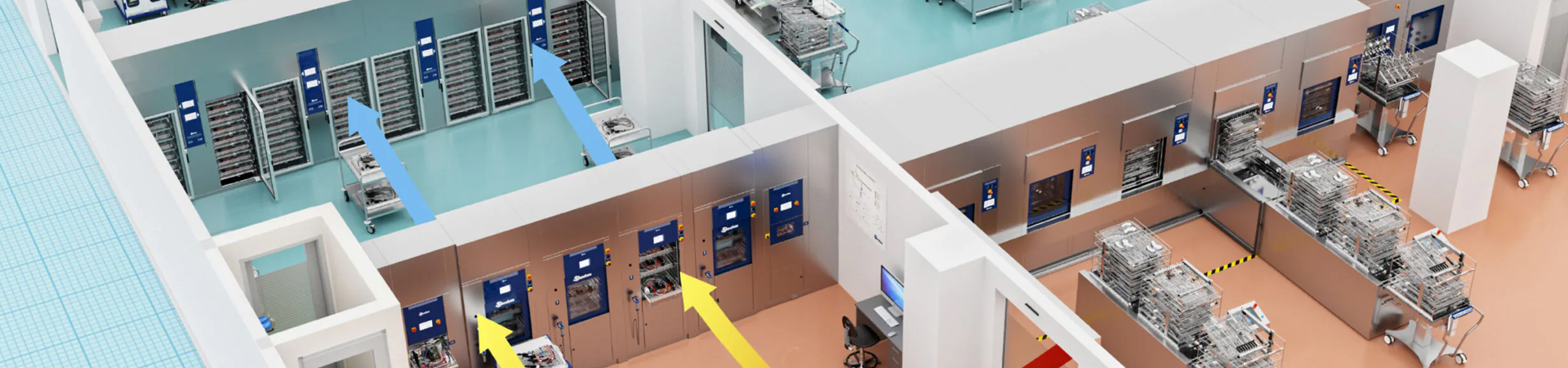
Reusable bronchoscopes follow a verified four-step reprocessing routine. Step one is bedside cleaning: wipe the outer surface with enzymatic cleaner and flush 200 mL enzymatic liquid through the working channel right after use. Step two covers manual decontamination, starting with a 5 psi leak test lasting 30 seconds, followed by full brushing of channels, suction valves and biopsy ports. Step three uses automated reprocessors for enzymatic washing, peracetic acid high-level disinfection and water rinsing. Step four includes 30 minutes of drying with HEPA filtered air and upright storage in ventilated cabinets.
The reprocessing room keeps negative pressure of -5 Pa and 12 air renewals each hour. Staff wear N95 masks, face shields and fluid-proof gowns while manually cleaning equipment. Weekly biological tests take samples from working channels, suction passages and scope tips. Hospital standards demand zero bacterial colonies, requiring full sterilization rather than standard high-level disinfection.
A tracking system records the cleaning state of each reusable bronchoscope. Color labels mark status: green for usable devices, yellow for units being reprocessed, red for quarantined scopes that failed leak or bacteria checks. The system blocks red-tagged scopes from being sent to treatment areas.
Technical Note: Automated reprocessors need a unique cycle designed only for respiratory bronchoscopes and cannot share programs with gastrointestinal endoscopes. Swap drying cabinet HEPA filters every six months; replace early if filter pressure loss goes over 0.5 inch H₂O.
Subscribe to comprehensive endoscopic and minimally invasive solutions from Biovisus.Elevate diagnostic precision and therapeutic outcomes across GI, pulmonology, urology, and surgical suites with integrated imaging and procedural systems.
© Nortek HealthCare Group Ltd., 2009-2026. All rights reserved.
This site operates under the laws of the People's Republic of China. Your access and use constitute acceptance of these Terms of Use and our Privacy Policy. All content is governed by our Privacy Notice. For details or inquiries, please Contact Us or use the site's search function.